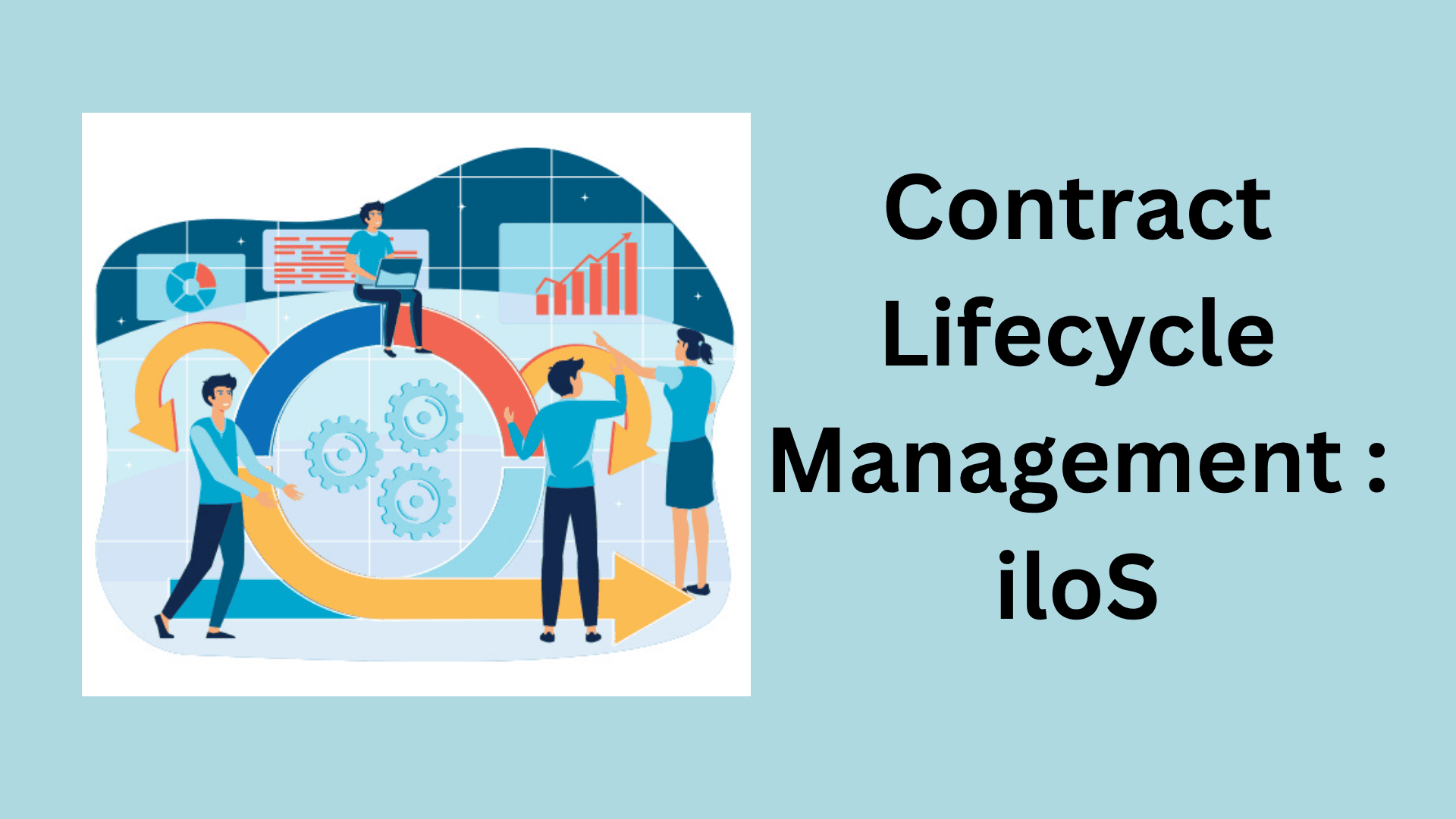
The way organizations manage contracts is undergoing a fundamental transformation. What was once a routine legal function largely administrative and reactive has now evolved into a strategic capability that directly influences business speed, compliance posture, and risk exposure. Contract Lifecycle Management (CLM) is no longer just about storing agreements or tracking signatures. It has become the backbone of modern legal and commercial operations.
This shift is not simply about digitization. It is about intelligence. Businesses are moving from handling contracts as isolated documents to leveraging them as structured, data-driven assets that actively inform decisions.
At the core of this evolution lies the integration of artificial intelligence, automation, and system connectivity. Organizations that recognize CLM as an operating system, not just a tool, are building a competitive advantage. Those that continue to treat it as a repository are already lagging behind.
The reality of CLM today
Traditionally, CLM followed a predictable lifecycle: request initiation, drafting, negotiation, approval, execution, and storage. Most legacy systems focused on digitizing these steps, bringing in efficiencies such as document tracking and version control. While useful, this approach only scratched the surface.
Modern CLM platforms go far beyond process management. They interpret contract language, extract meaningful data, identify risks, and integrate seamlessly with business systems. In essence, they convert contracts into actionable intelligence.
This shift represents a move from operational efficiency to decision intelligence. Contracts are no longer endpoints; they are continuous inputs into business strategy.
Why CLM is gaining momentum now
The rising importance of CLM is not accidental, it is driven by structural changes in how businesses operate.
First, the sheer volume of contracts has exploded. Every SaaS subscription, vendor onboarding, employment agreement, and partnership deal adds to the workload. Legal teams are expected to handle increasing complexity without proportional growth in headcount. Manual processes simply cannot scale.
Second, regulatory expectations have intensified. Data protection laws, cross-border compliance requirements, and sector-specific regulations demand precision. A missing clause or overlooked obligation is no longer a minor issue, it can translate into financial penalties or reputational damage.
Third, business teams are demanding speed. Sales functions want faster deal closures, procurement teams need rapid vendor onboarding, and leadership expects legal to enable growth rather than slow it down.
Finally, AI technology has matured. What was once experimental is now capable of understanding legal language, extracting structured data, and identifying contextual risks. This technological readiness has unlocked the true potential of CLM.
AI-Driven contract drafting: A new paradigm
Contract drafting has traditionally been time-consuming and repetitive. Lawyers relied heavily on static templates, manually editing clauses and tailoring agreements based on experience. This process created bottlenecks and inconsistencies.
AI-driven drafting introduces a fundamentally different approach. Instead of starting from scratch or modifying templates, legal teams input deal-specific parameters. The system then generates context-aware drafts, suggests relevant clauses, and flags deviations in real time.
This shift has significant implications. Junior lawyers can produce high-quality drafts with greater consistency, while senior professionals can focus on strategic negotiation and risk assessment rather than repetitive tasks.
However, this evolution comes with caution. Over-reliance on AI without critical oversight can lead to errors being replicated at scale. AI should function as a co-pilot, enhancing human capability, not replacing judgment.
The underlying driver of this transformation is clear: contract volume has grown exponentially, but legal team capacity has not. AI bridges this gap.
Clause extraction: Unlocking hidden value
Contracts have always been rich in information, but that information has historically been trapped in unstructured text. Clause extraction changes this dynamic by converting legal language into structured, searchable data.
Using AI, organizations can identify key clauses such as termination rights, indemnities, liability caps, payment terms, and compliance obligations. This allows legal and business teams to quickly answer critical questions, such as which contracts carry unlimited liability or which agreements are nearing expiration.
The value of this capability is immense. It enables visibility across thousands of contracts, turning what was once opaque into something measurable and actionable.
That said, accuracy depends heavily on data quality and model training. Poorly structured contracts or inconsistent language can reduce effectiveness. The principle remains simple: the better the input, the better the output.
Ultimately, clause extraction addresses a core problem, organizations do not lack contracts; they lack visibility into them.
Risk scoring: Moving from reactive to predictive
One of the most transformative aspects of modern CLM is risk scoring. Traditionally, legal teams reviewed contracts individually, often under time pressure, leading to inconsistent attention across agreements.
Risk scoring introduces a structured, data-driven approach. AI evaluates contracts against predefined parameters, identifying unfavorable clauses, missing protections, deviations from standards, and jurisdictional concerns. Each contract is assigned a risk score, allowing teams to prioritize effectively.
This changes legal operations from reactive review to proactive risk management. High-risk contracts receive immediate focus, while low-risk agreements can move faster through the pipeline.
However, the effectiveness of risk scoring depends on proper configuration. If the underlying framework does not reflect the organization’s risk appetite, the outputs can be misleading.
In essence, risk scoring does not create strategy, it reflects it. Organizations must define their policies clearly for the system to deliver meaningful insights.
CLM as the Legal Operating System
The most significant shift in CLM is its transition from a standalone tool to an integrated operating system. Modern CLM platforms connect with CRM systems for sales contracts, ERP systems for procurement and payments, HR systems for employment agreements, and compliance platforms for regulatory tracking.
This integration creates a unified ecosystem where contracts are no longer static files but active components of business operations.
For example, a contract that specifies payment timelines and penalties is not just stored, it triggers workflows. Finance teams receive alerts, payments are tracked, and risks are flagged automatically.
This transforms contracts into living instruments that drive execution and accountability. It is no longer about managing documents; it is about managing obligations and outcomes.
Implementation challenges: Where organizations struggle
Despite its potential, CLM adoption is not without challenges. Many implementations fail to deliver expected value due to operational gaps rather than technological limitations.
A common issue is lack of standardization. If contracts are inconsistent, AI cannot function effectively. Organizations must first establish structured clause libraries and governance frameworks.
Resistance to change is another barrier. Legal teams often perceive automation as a threat rather than an enabler. This mindset slows adoption and limits impact.
There is also a tendency to overestimate AI capabilities. Organizations expect perfect outputs from the start, without recognizing that AI systems require training and iteration.
Finally, lack of integration can undermine the entire initiative. A CLM system that operates in isolation cannot deliver strategic value. It must be embedded within broader business workflows.
The Future of CLM
The evolution of CLM is far from complete. The next phase will push the boundaries of what is possible. Predictive contracting will enable organizations to anticipate disputes, forecast renewals, and assess financial risks before they materialize.
AI-driven negotiation support will provide insights based on historical outcomes, improving deal strategies. Real-time compliance monitoring will ensure that contracts remain aligned with changing regulations, reducing exposure to legal risks. Natural language interfaces will make contract data more accessible, allowing users to query systems in plain language and receive instant insights.
These advancements will further embed CLM into the core of business operations.
Final Perspective
Contract Lifecycle Management is no longer optional. It is becoming the foundation on which modern organizations manage risk, ensure compliance, and drive growth.
The real shift is not from paper to digital, it is from passive documentation to active intelligence.
Organizations that embrace this transformation will move faster, operate smarter, and maintain stronger control over their contractual landscape. Those that do not will continue to struggle with inefficiencies, blind spots, and growing risk exposure.
The question is no longer whether to adopt CLM. The question is how quickly you can evolve from managing contracts to leveraging them as strategic assets.