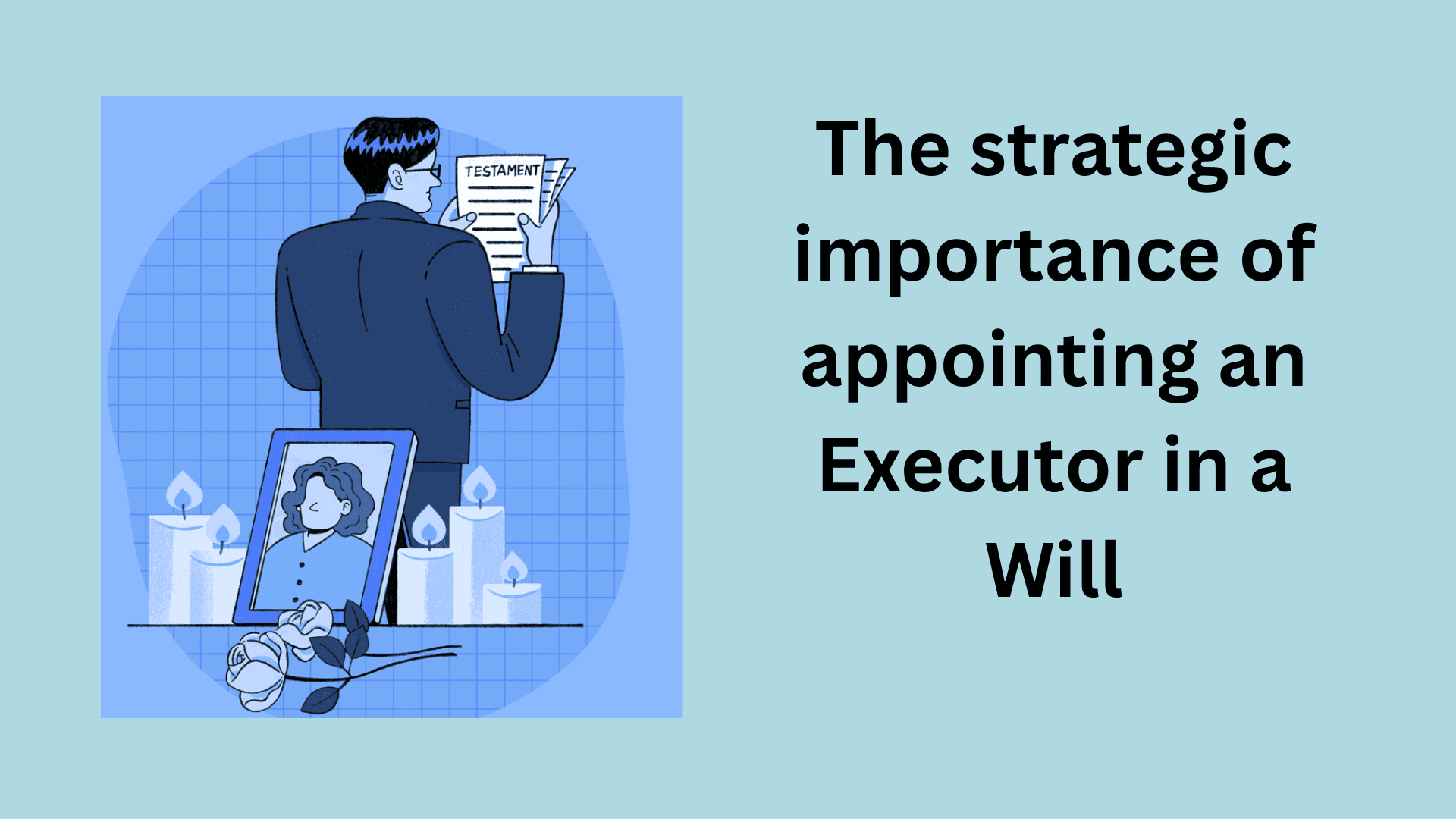
Estate planning in India is gaining traction, but the conversation remains disproportionately skewed. Most individuals focus on what should happen to their assets, while very few think deeply about how it will actually happen. This creates a structural gap.
A will may be perfectly drafted, emotionally balanced, and legally sound, but without the right executor, it risks becoming a document of intent rather than a mechanism of execution.
Think of it this way: a will without an executor is not incomplete on paper, but it is operationally fragile. It outlines strategy without assigning ownership. And in legal and financial matters, absence of ownership almost always leads to delay, dispute, or dilution of intent.
Understanding the Executor: More than a formal role
An executor is not merely a named individual in a will; they are the operational authority responsible for turning written instructions into real-world outcomes.
Under the Indian Succession Act, 1925, the executor is the legal representative of the deceased, entrusted with full responsibility for estate administration.
In practice, this means the executor initiates probate proceedings where required, identifies and safeguards assets, settles liabilities including debts and taxes, and ensures that the distribution of assets aligns precisely with the wishes of the testator. The executor effectively steps into the shoes of the deceased for all legal and financial purposes, becoming the central decision-maker during the transition phase.
This is why the role demands not just trust, but capability. It is less about who the person is in relation to the testator, and more about what they can deliver when execution complexity begins to unfold.
Legal positioning: Authority backed by statute
The legal foundation of an executor’s authority in India is well-defined. Section 2(c) of the Indian Succession Act, 1925 provides the formal definition of an executor. Section 211 establishes that the executor is the legal representative of the deceased, granting them the authority to act on behalf of the estate. Section 213 introduces the requirement of probate in certain cases, particularly to establish formal recognition of the executor’s authority.
Importantly, the executor derives authority from the will itself, even before probate is granted. Probate strengthens and validates that authority in the eyes of institutions, but the foundational mandate originates from the document. This distinction is critical because it reinforces the idea that the executor is not an external addition, they are embedded into the will’s core structure.
Executor as a Governance Mechanism
A well-chosen executor does more than administer assets; they create execution certainty. By translating intent into action with clarity and discipline, they reduce ambiguity in asset allocation and significantly lower the probability of disputes among beneficiaries. In many ways, the executor extends the testator’s control beyond their lifetime.
This is where the analogy of a “post-death CEO” becomes relevant. Just as a CEO executes a company’s strategy, the executor operationalizes the will. They manage stakeholders, resolve friction points, and ensure timelines are adhered to. Without this leadership layer, even the most thoughtfully drafted will can falter under practical constraints.
Co-Executors: Introducing Checks and Balances
In situations where neutrality, oversight, or specialized expertise is required, appointing co-executors can be a strategic decision. This approach distributes authority across multiple individuals, creating a built-in system of checks and balances. It reduces the risk of unilateral decision-making and enhances accountability, particularly in complex estates involving diverse assets or sensitive family dynamics.
However, shared authority introduces its own challenges. Without clearly defined roles and decision-making frameworks, co-executors can face deadlocks. Differences in perspective, lack of coordination, and ambiguity in responsibility can slow down execution and create friction rather than resolving it.
The effectiveness of co-executors, therefore, does not depend on the number of individuals appointed, but on how well the governance structure is designed. A robust framework within the will, covering voting mechanisms, role clarity, and conflict resolution protocols, is essential to ensure that shared responsibility does not become diffused accountability.
Designing for execution: Practical considerations
Executor selection should be approached with a capability-first mindset. While trust remains important, it cannot be the sole criterion. The role requires a blend of legal understanding, financial awareness, administrative discipline, and emotional objectivity. An executor must be able to navigate institutional processes, manage documentation, and handle beneficiary expectations without bias.
Building redundancy into the structure is equally important. Appointing a primary executor along with an alternate ensures continuity in case the first appointee is unable or unwilling to act. This simple step can prevent unnecessary delays at a critical time.
Clarity within the will itself is another non-negotiable factor. Even the most capable executor cannot compensate for vague or ambiguous instructions. Asset distribution must be articulated with precision, leaving minimal room for interpretation. The executor’s powers should also be explicitly defined to avoid disputes over authority during implementation.
For estates involving business interests, cross-border assets, or significant scale, a professional or institutional executor can be a strategic choice. Such executors bring neutrality, continuity, and specialized expertise, reducing the operational burden on family members and ensuring a more structured execution process.
Closing the gap between Intent and Reality
The core issue in estate planning today is not the absence of intent, it is the absence of execution thinking. Most individuals invest time in deciding “who gets what,” but far fewer consider “who ensures it actually happens.” This imbalance creates a gap where disputes arise, timelines stretch, and the original intent begins to erode.
Recognizing the executor as a governance layer rather than a procedural necessity fundamentally changes how a will is designed. It shifts the focus from static allocation to dynamic execution. And in doing so, it ensures that the will delivers value not just as a document, but as a functioning system.
In the end, estate planning is not complete when the will is written. It is complete when there is clarity on how that will will be executed, by whom, and under what framework. The executor sits at the center of that clarity, quietly determining whether intent translates into reality or remains confined to paper.